 Anmelden
Freie Software in der Schule: Lizenzen für Dokumente und Werke
Austausch von Unterrichtsmaterial im Kollegium: wann und wie darf ich das nutzen? Wie schaffe ich Klarheit darüber? Ein Blick in die CC-Lizenzen aus Sichtweise einer Lehrkraft.



Austausch von Unterrichtsmaterial im Kollegium: wann und wie darf ich das nutzen? Wie schaffe ich Klarheit darüber? Ein Blick in die CC-Lizenzen aus Sichtweise einer Lehrkraft.

Die Sammelklage gegen Microsoft, GitHub und OpenAI steuert auf einen Misserfolg zu. Mittlerweile bleiben nur noch zwei von 22 Klagepunkten übrig.
In an historic ruling within the EU, a Belgian court has upheld the decision of the country’s regulator to introduce Router Freedom for fiber networks. The objections, raised by a local internet service provider, were deemed unfounded. This landmark decision represents a significant victory for consumer rights, and we urge other national regulators to follow this example.

Internet services providers (ISPs) have been pushing back in different ways to limit the ability of end-users to choose and use their own routers for internet connection. After a thorough regulatory process which officially confirmed Router Freedom in Belgium, the local ISP Orange contested the decision of the Belgian Institute for Postal Services and Telecommunications (BIPT) alleging lack of proportionality. Although past court cases in other countries have been decided in favour of end-users, the Orange vs the BIPT case represents an important victory for Router Freedom: this is the first time a court refers to fiber networks from the perspective of the regulatory framework established by the 2020 reform of the telecommunications law in Europe.
In September 2023, the BIPT, following the BEREC guidelines, defined the position of the “network termination point“. This means that routers, modems and optical network terminals (ONT) would not be part of the ISPs’ infrastructure, opening up the possibility for freedom of choice in the equipment market. The regulatory decision encompassed fiber networks, following by a comprehensive technical, economical and legal analysis conducted by the regulator.
 Orange questioned the Belgian regulator
decision’s regarding the position of the NTP, which introduced Router
Freedom in the country. Source: BEREC
Orange questioned the Belgian regulator
decision’s regarding the position of the NTP, which introduced Router
Freedom in the country. Source: BEREC
Soon after the publication of the decision, Orange started litigation at the Market Court in Brussels against the regulator, listing a long list of arguments against the decision:
The court dismissed all Orange’s arguments as unfounded, confirming the BIPT’s decision to introduce Router Freedom in Belgium by defining the position of the NTP at Point A. The court ruled that:
The FSFE emphasises the importance of this ruling as the court has not only clarified the procedural aspects, but confirmed the Belgian regulator's diligence in analysing all the market, technical and sustainability aspects concerning Router Freedom. It should be highlighted that the court reaffirmed the BIPT’s conclusion that no technological necessity to limit Router Freedom in fiber networks was found. This resonates with FSFE’s demands that ISPs’ commercial interests should not prevail over consumer rights. This ruling should serve as an precedent for other EU member states who have argued the existence of such technological constraints in fiber networks.

For many years ISPs have been pushing back in different manners to limit the ability of end-users to choose and use their own routers for internet connection. Their lobbying power has been intense against Router Freedom in fiber networks. Countries like Austria and Latvia have prioritized operators’ interests by not safeguarding end-users’ freedom of routers, while others like Greece and Croatia have promoted a compromise by allowing Router Freedom in DSL and coax but excluding fiber. Particularly concerning are countries, like Germany, which have positively decided in the past in favour of Router Freedom but are facing pressure from ISPs to exclude fiber networks.
The FSFE is the only civil-society organisation that systematically monitors and advocates in favour of Router Freedom across Europe. We have intervened in key regulatory processes, and articulated alliances and coalitions with local digital rights groups, industry representatives and consumer protection organisations. We have participated in dozens of conferences and events in Europe, and have been quoted by the media, think tanks and academics.
Most importantly, we are aiming at the future. Our advocacy does not expire in the short term. We are committed to Device Neutrality as we believe everyone should be able to bypass gatekeepers – these small or large corporations blocking their rights – to run Free Software on their devices. For example, while Apple is hampering software freedom on smartphones, ISPs prohibit subscribers to have their own routers running Free Software operating systems.
An open, healthy and neutral Internet needs Router Freedom, as this freedom refers to the hardware layer of Net Neutrality. Indeed, Router Freedom was considered a top priority by a study on the future of the Net Neutrality Regulation commissioned by the EC last year. The study cited the FSFE in several parts.
New challenges are appearing in the horizon. Next year the EU will assess its telecom legislation that tasked BEREC to develop the guidelines on the NTP. In parallel, as the importance of satellite networks grows, it is not clear how regulators will react to lack of freedom of choice among proprietary devices.
Router Freedom is key for an open and neutral Internet. We have achieved so much in the last five years balancing the power of ISPs to promote software freedom in routers and modems! Your support is vital for our advocacy and policy engagement in favour of your right to choose and use your own router. Please become an FSFE supporter today and help us keep our independence! Donate nowA big shout out for the FSFE Benelux Team for the amazing work in translating the lengthy and complex court decision!
Die Open-Source-Gemeinschaft kann schnell zu einem sehr toxischen Ort werden, wie der Entwickler des unabhängigen Browsers Ladybird gerade erfahren muss.

Hüpfen mit dem Pinguin mal anders.


Die Gewinner des Frühlingswettbewerbs vom 15.03.2024 bis zum 30.06.2024 stehen fest. Der Erstplatzierte erhält ein NitroTablet von Nitrokey.


cURL wird oft unbedacht eingesetzt, indem darauf basierende Befehle auf GitHub und anderswo kopiert und ausgeführt werden. Um dieses Sicherheitsrisiko abzuschwächen, liefert Debian cURL jetzt mit HTTP/3 aus.

Auch nach der Veröffentlichung von Plasma 6.1 gönnen sich die Entwickler bei KDE keine Pause und arbeiten bereits fleißig an der Fehlerbereinigung sowie an neuen Funktionen für Plasma 6.2

FOSS News in Woche 27: Von Farben bis zum neuen ARM ISO


Joplin ist mit vielen Neuerungen und Verbesserungen in Version 3.0 erschienen. Neben einem Papierkorb gibt es nun auch Plugins in den Mobile-Apps.

 Mit diesem vierteiligen E-Learning-Paket mit 235 Lektionen und mehr als 24 Stunden Videomaterial bietet die Golem Karrierewelt eine umfassende, praxisnahe und flexible Einführung in die Administration von Linux-Systemen. (Golem Karrierewelt, Linux)
Mithilfe von SSH kannst du eine sichere Shell-Verbindung über das Netzwerk aufbauen. Mit dem entsprechenden Wissen kannst du deinen SSH-Zugriff zusätzlich absichern.


 Python-Programme können davon profitieren, Code oder ganze Bibliotheken oder Module aus anderen Sprachwelten zu integrieren. Wir zeigen, wie das mit C geht. (Programmiersprachen, Python)
Das Ubuntu 22.04 Buch für Einsteiger Seit Juni 2024 ist das neue Buch von Linux Autor Josef Moser über Ubuntu 24.04 LTS erhältlich. Wie immer handelt es sich dabei um eine sogenannte Schnellanleitung. Das bedeutet, dass es sich inhaltlich hauptsächlich an Linux Einsteiger richtet. Ubuntu zählt zu den beliebtesten Linux Betriebssystemen. Alle zwei Jahre veröffentlicht… Weiterlesen Ubuntu 24.04 Buch von Josef Moser veröffentlicht
Der Beitrag Ubuntu 24.04 Buch von Josef Moser veröffentlicht erschien zuerst auf Die Seite für LINUX UMSTEIGER.
Der 6. Teil einer Einführung in die Python3-Bibliothek Tkinter und der lange Weg zum perfekten GUI.

 Mit einigen Tricks kann Linux auch auf einem Laufwerk in der Cloud laufen. Das Unterfangen war wohl nicht ganz einfach. (Google Drive, Google)
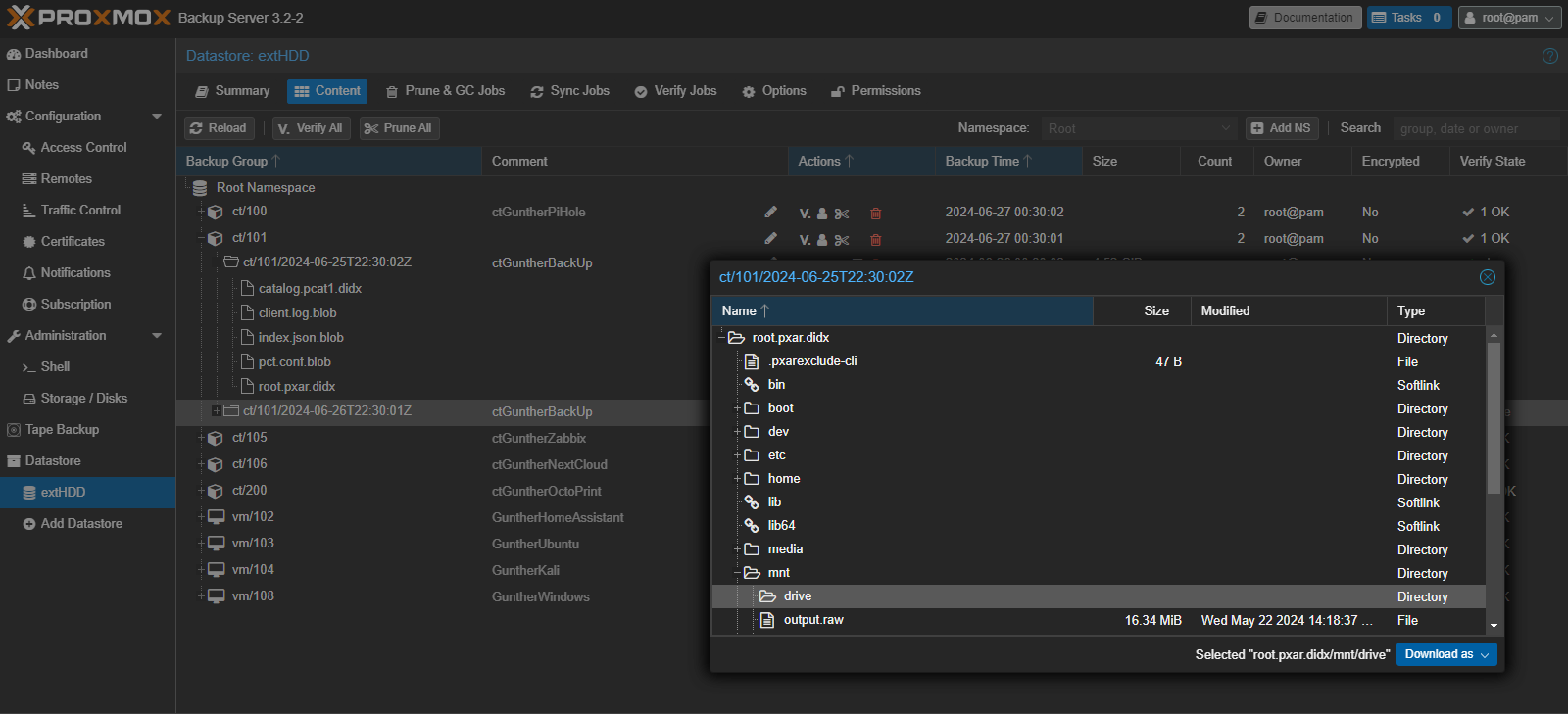
In meinem Proxmox-Cluster habe ich eine Node, auf der ein Linux-Container als Proxmox Backup Server läuft.


Eine eigene Non-Profit-Organisation und eine kräftige Spende treiben Ladybird voran. Gleichzeitig macht das Projekt deutlich, wie unabhängig es sein will.

Mit openSUSE Leap 15.6 bekommt man eine sehr stabile Linux-Distribution. Die Admin-Weboberfläche Cockpit ist ein willkommener Neuzugang.
EndeavourOS, eine beliebte, auf Arch Linux basierende Linux-Distribution feiert ihr fünfjähriges Bestehen. Mit dieser Ausgabe kehr auch der zuvor eingestellte ARM-Zweig wieder zurück.

Für unsere 25te Episode des Software Freedom Podcast freuen wir uns Hannes Mehnert, einer der MirageOS Hauptentwickler, begrüßen zu dürfen. Zusammen mit Matthias Kirschner, President der FSFE, spricht Hannes über MirageOS, OCaml und Modulare Systeme. Diese Folge gibt einen Überblick von den Grundlagen bis zur Zukunft von MirageOS.
Als einer der Hauptentwickler vonMirageOS hat Hannes Mehrnert ein umfangreiches Verständnis der Funktionsweise des Programmierrahmens und seiner Module. Er und Matthias sprechen über die Verwendung von MirageOS, seine Finanzierung und wie du MirageOS als Freiwillige*r unterstützen kannst. Außerdem sprechen beide über die funktionale Programmiersprache OCaml, die Grundlage auf der alles aufgebaut ist. Höre dir eine spannende Folge mit Hannes und Matthias an, während du mehr über MirageOS, modulare Systeme, reproduzierbare Builds und funktionale Programmierung lernst.
Die perfekte Episode für alle, die gerne mehr über MirageOS und modulare Systeme lernen wollen!
Show notes
Wenn dir diese Folge gefallen hat und du unsere kontinuierliche Arbeit für Softwarefreiheit unterstützen möchtest, hilf uns bitte mit einer Spende.
Ein kleines Videoexperiment zum Thema: Quellcode-Öffnung von Videospielen.


Die 93. Folge des Podcasts ‘Captain it’s Wednesday’ widmet sich dem Projekt FOSSWELT, dass wir kürzlich vorgestellt haben. Darüber spreche ich mit Ralf Hersel.

Folge 093 des CIW Podcasts.
FOSSWELT, mergen statt forken



 Nach längerem Überlegen habe ich mich entschlossen, von Windows auf Linux umzusteigen. Dafür gibt es einige sehr gute Gründe. (